
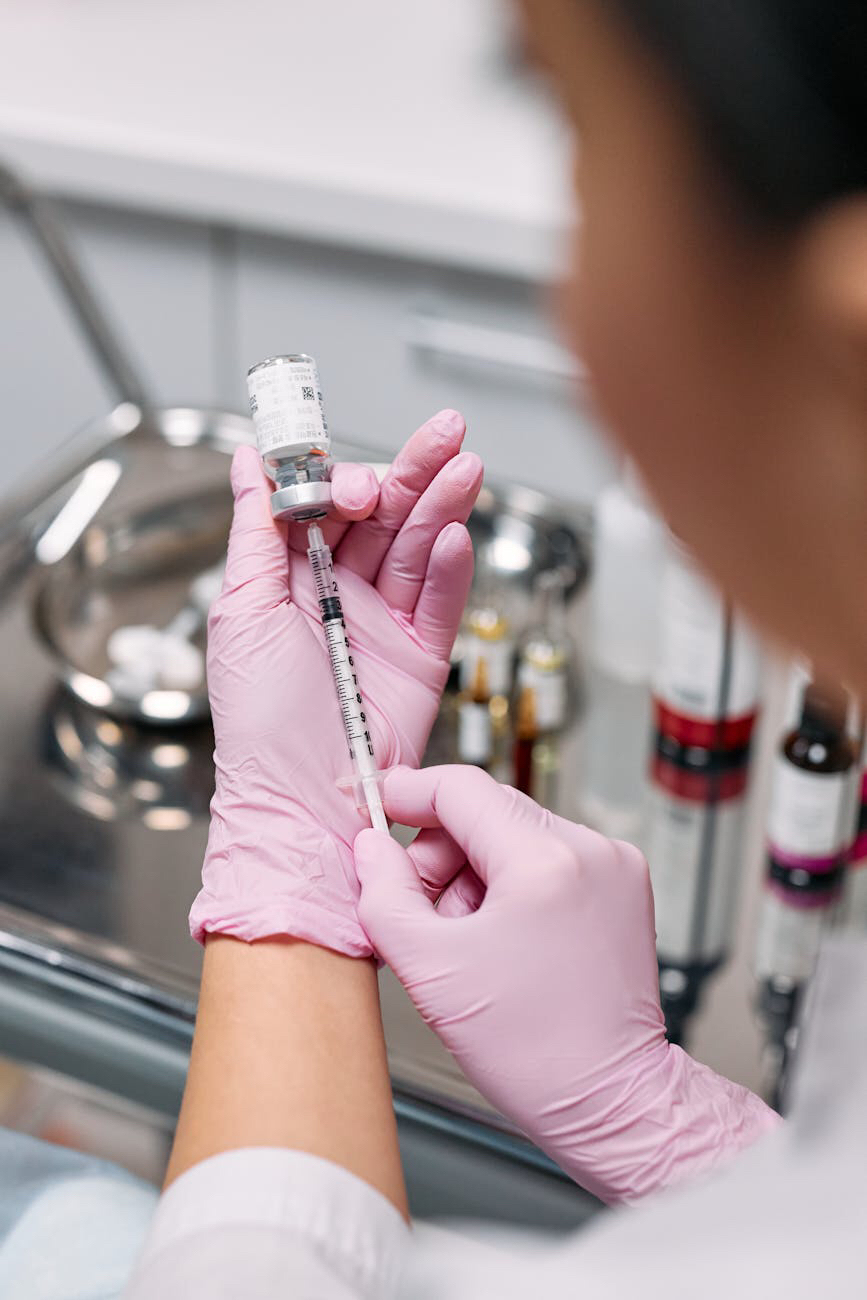
Covid-19 Boosters in the UK – Statement
This autumn is the first since the Joint Committee on Vaccination and Immunisation (JCVI) changed its policy on who can receive Covid-19 vaccination boosters following the change to exclude the majority of the ‘clinically extremely vulnerable’ groups including MND.
Some of you will have received the booster without an issue. Your GP/health professional will have exercised his/her own clinical judgement. However, many patients have been refused outright because of the new policy.
The policy gives flexibility to healthcare professionals. They can make exceptions on an individual basis. However, we are finding that many are not doing so.
As an informal patient group, we urge the government and JCVI to urgently review the eligibility criteria for the current and future booster programmes. The now endemic status of Covid-19 demands this. The exclusion of people with MND from automatic eligibility is not only medically indefensible, it is economically disproportionate.
Below we attach a statement signed by Professor Ammar-Al-Chalabi, Professor Dame Pamela Shaw and Professor Christopher McDermott and other leading neurology consultants.
We will do all we can to try to get the current policy changed, whether it is for this autumn or for future booster programmes.
You can help in a small way by signing and sharing this current petition.
Thank you
United2EndMND
Statement – COVID vaccination and MND
People with MND are not automatically eligible for COVID booster vaccination this year. While an argument could be made that MND does not make someone more vulnerable to the effects of COVID, anyone with MND affecting muscles involved in breathing would have more difficulty dealing with a respiratory tract infection and should therefore be regarded as vulnerable.
People with MND who have respiratory muscle weakness manifest by symptoms of breathlessness on walking or activities of daily living, disturbed sleep, or the inability to lie flat, or those with reduced vital capacity on testing, should be regarded as vulnerable and be eligible for vaccination. Such a recommendation would be in line with the view of the Chief Medical Officer’s Office during the pandemic.
Signatories
Professor Ammar Al-Chalabi, Professor of Neurology and Complex Disease Genetics, King’s College London
Professor Dame Pamela Shaw, Professor of Neurology, University of Sheffield
Professor Chris McDermott, Professor of Translational Neurology, University of Sheffield
Dr Andrew Barritt, Consultant Neurologist, Royal Sussex County Hospital
Dr Caroline Barry, Consultant in Palliative Medicine, Norfolk and Norwich University Hospital
Dr James Bashford, Consultant Neurologist, King’s College Hospital
Dr Marc Edwards, Consultant Neurologist, University Hospital of Wales
Dr Pablo Garcia-Reitboeck, Consultant Neurologist, St George’s Hospital
Dr Hisham Hamdalla, Consultant Neurologist, Salford Royal
Dr Timothy Harrower, Consultant Neurologist, Royal Devon and Exeter Hospital
Dr Tom Lambert, Consultant Neurologist, Royal Stoke University Hospital
Dr Danielle Leighton, ST7 Neurology trainee, Queen Elizabeth University Hospital
Dr Tom Massey, Consultant Neurologist, Cardiff and Vale University Healthboard
Dr Sara Mazzucco, Consultant Neurologist, Great Western Hospital
Professor Karen Morrison, Honorary Professor, Queen’s University Belfast
Dr Aleksandar Radunovic, Consultant Neurologist, Royal London Hospital
Dr Alex Thompson, Consultant Neurologist, John Radcliffe Hospital
Dr Tim Williams, Consultant Neurologist, Royal Victoria Infirmary
Professor Carolyn Young, Consultant Neurologist, The Walton Centre

 We are United2EndMND - Changing the conversation