

Building the Institute
These are truly exciting and promising days in MND/ALS research and the search for a cure/treatments. Following the successful #united2endmnd campaign in 2021, the UK Government has released and granted significant chunks of the £50m promised for investment in a coordinated, detailed scientific plan for translational MND research.
Our scientists are now working daily, building the solid foundations of the
UK MND Research Institute
which was formally launched in November 2023. Have a read of our post capturing the day.
The institute has at the heart of its mission of changing the conversation for our community by accelerating the progress towards truly effective treatments.
But what exactly is this Institute?
One thing it is NOT, is “bricks and mortar”. No, in the 21st century science and communications technology has created new ways of working that were unimaginable even only 20 years ago.
Think of it as more of network of expertise and resources all working together with a single aim of driving treatments to patients…
a Virtual Institute…
Comparable to a car factory designed and built to make reliable vehicles. In this case Institute has one purpose, to facilitate/deliver, using standard processes, components and dedicated resources, candidate experimental treatments for MND.
Readers may have heard of the, rather unfortunately named, Valley of Death that appears to exist between the huge promises of modern day research and delivering actual tangible benefits to patients. For our disease, this is especially so, with the giant leaps in foundational science yet to realise a single, truly effective treatment. Translational research, is the name given to the means by which this valley can be bridged. To make real strides in such a endeavour, our researchers need sustainable and consistently funded resources, both human and technolognical. Crucially, like a car factory, standard reliable tools, information/data access and processes are required.
“Can you give examples?” You might ask.
Here are two..
- Traditionally clinical trials were designed, completed and then the infrastructure was effectively ‘torn’ down, losing a lot of the potential knowledge gained but also needing new infrastructure in future trials and research. The MND Institute has a ‘Vision’ to solidify a strong foundation with an almost on-demand trials/drug screening infrastructure.
- Our researchers need better, more representative disease models to enable better and more precise identification of disease targets, perhaps even including personalisation to the patient. Providing such models is an another aim of the Institute.
Is the MND Institute really the only required element to the panacea of bringing truly effective treatments to our community? No, it would be folly to believe that, but without its national plan the UK will be left behind in the search for potential treatments and skill lost to the global market.
For more detail, take a look at our 2021 UK Government spending review submission. A key element is that a change of approach is needed for a disease that scientists have reached a good understanding of and wish to take from the lab and into patient trials at an increased pace.
The following diagram from our Technical Overview of the Institute shows the envisaged impact of such a translational approach for our disease, bringing together patients, funders, pharma and researchers.
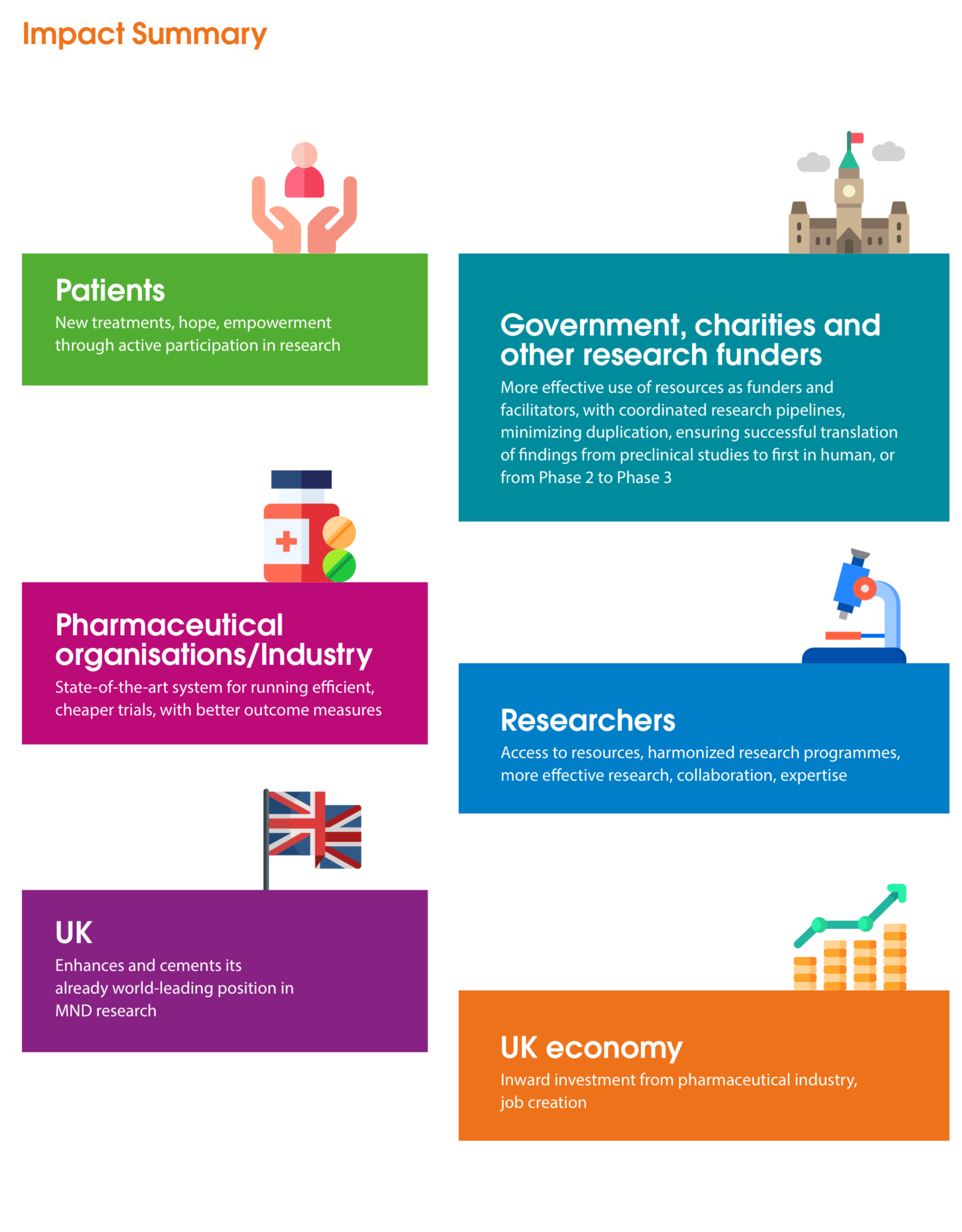
We wanted to change the conversation by being able to potentially offer every MND patient, upon diagnosis, a place on a trial or study. This requires/required an integrated new approach by the research community and fundamental changes in the way research is funded by government, moving from a piecemeal approach to a strategic and coordinated scientific plan with guaranteed funding.
What did we NOT want the £50m for?
Research for care and general neurodegenerative research is not intended to be included in the Institute’s mission. Why? The institute is unashamedly focused on becoming a translational research factory bringing treatments to patients. However, care research is vitally important for our community. Such research will continue to be funded via separate, stand alone, applications to the existing government research funding agencies, the NIHR and the MRC, and the charities.
Its been a while coming!
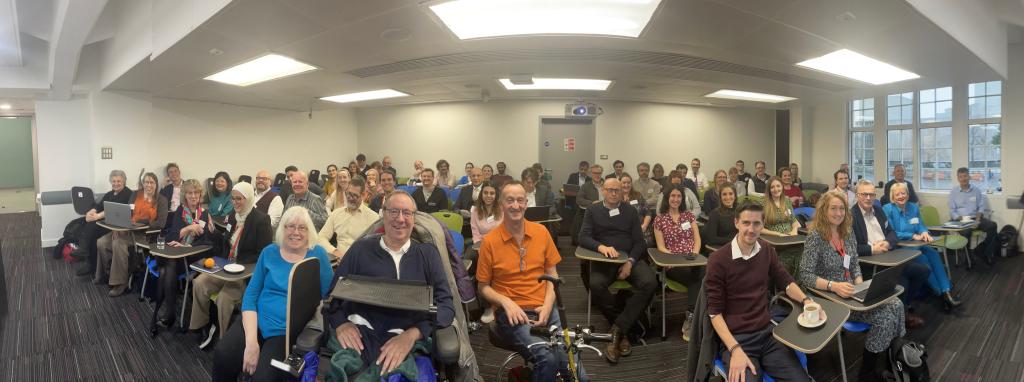
The Institute was over 2 years or so in the making. The first full business meeting of the leading researchers and wider MND research family was held in late November 2022. Over 80 people gathered from all over the UK in London, including representatives from government, the leading MND charities, the translational specialist charity LifeArc and people living with MND.
After the full launch, the Institute has its own dedicated website, woo-hoo!
and the Institute is on X and bluesky.
Stay tuned for developments and don’t forget about our key documents pages and FAQs page. Although we are keeping these updated, we now hand over largely to the Institute’s social media presence.

 We are United2EndMND - Changing the conversation