
LifeArc Translational Science Summit on MND and Rare Dementias – a patient view
Collaboration is vital in research for complicated neurodegenerative diseases, especially with MND.
LifeArc, a funder of innovative research in the critical area of translational* science, and a key funder of the UK MND Research Institute, recently held its first summit on MND and the rare Dementias in London.
* the process of taking of promising laboratory science into real clinical treatments and therapies in patients
Bringing together research experts, investors and patients, key areas of interest were explored in panel discussions and presentations. LifeArc have written an excellent summary of the meeting in their recent blog.
The agenda was broadly split into 2 with the morning focusing on new research into neurodegeneration and the afternoon covering the future of MND research and drug repurposing.
Here are just some of our thoughts on the day, from our perspective as patients. We hope they are useful for our community. We highly recommend not only attending MND conferences, but if asked to contribute, grab the opportunity if you are able to.
New approaches to our disease are always great to see, and the presentation on novel gene therapy exploration from Aviadobio, a UK based biotech, was one of the morning’s highlights.
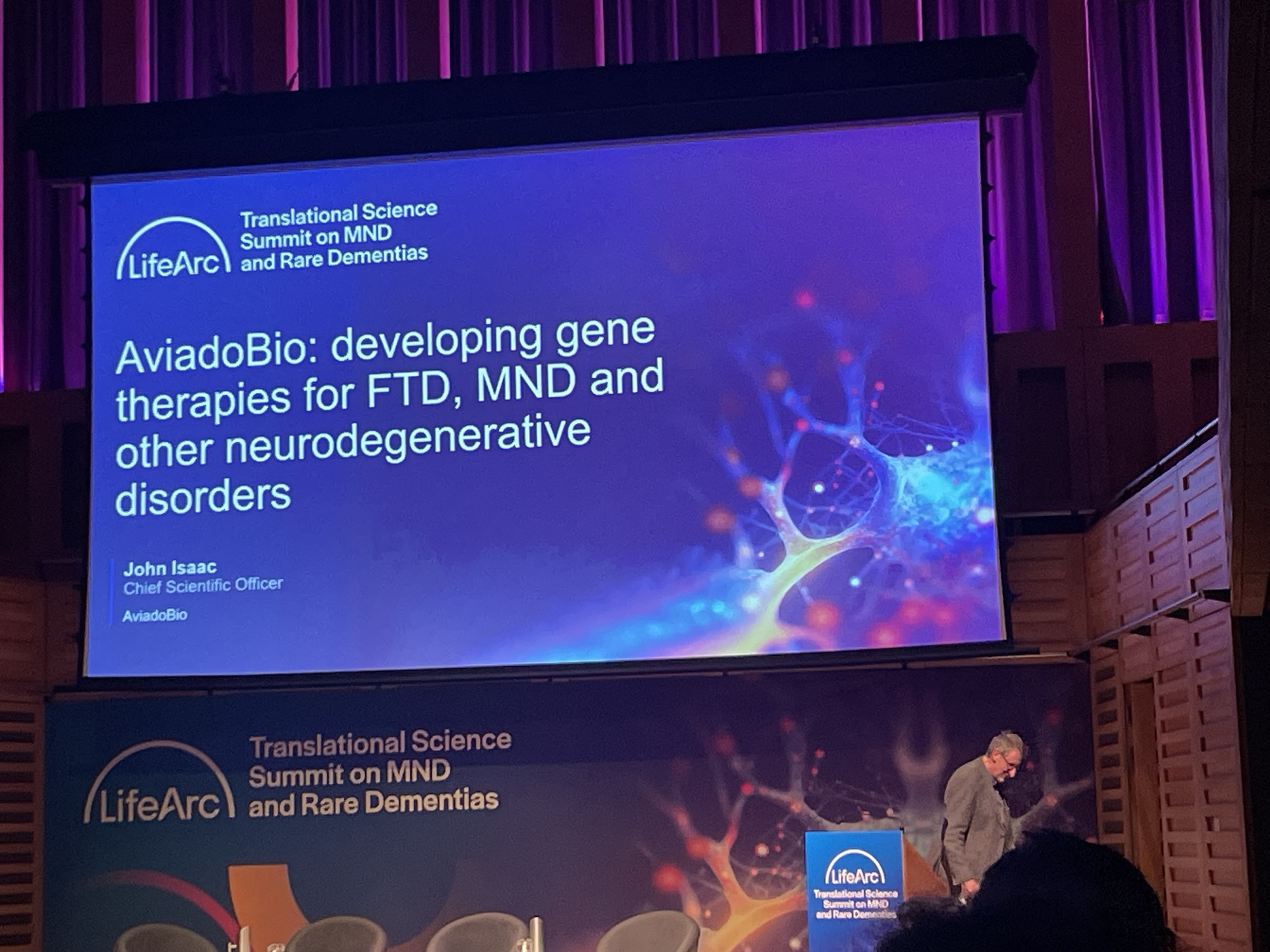
Aviadobio are, amongst other areas, developing viral vector gene therapy delivery mechanisms. Initially targeting frontotemporal dementia (FTD) they are also researching its application in MND. Put simply, viral vector delivery offers the possibility of once only treatments as opposed to repeated injections. Backed by significant cash from investors (in excess of £50m) this was an exciting presentation.
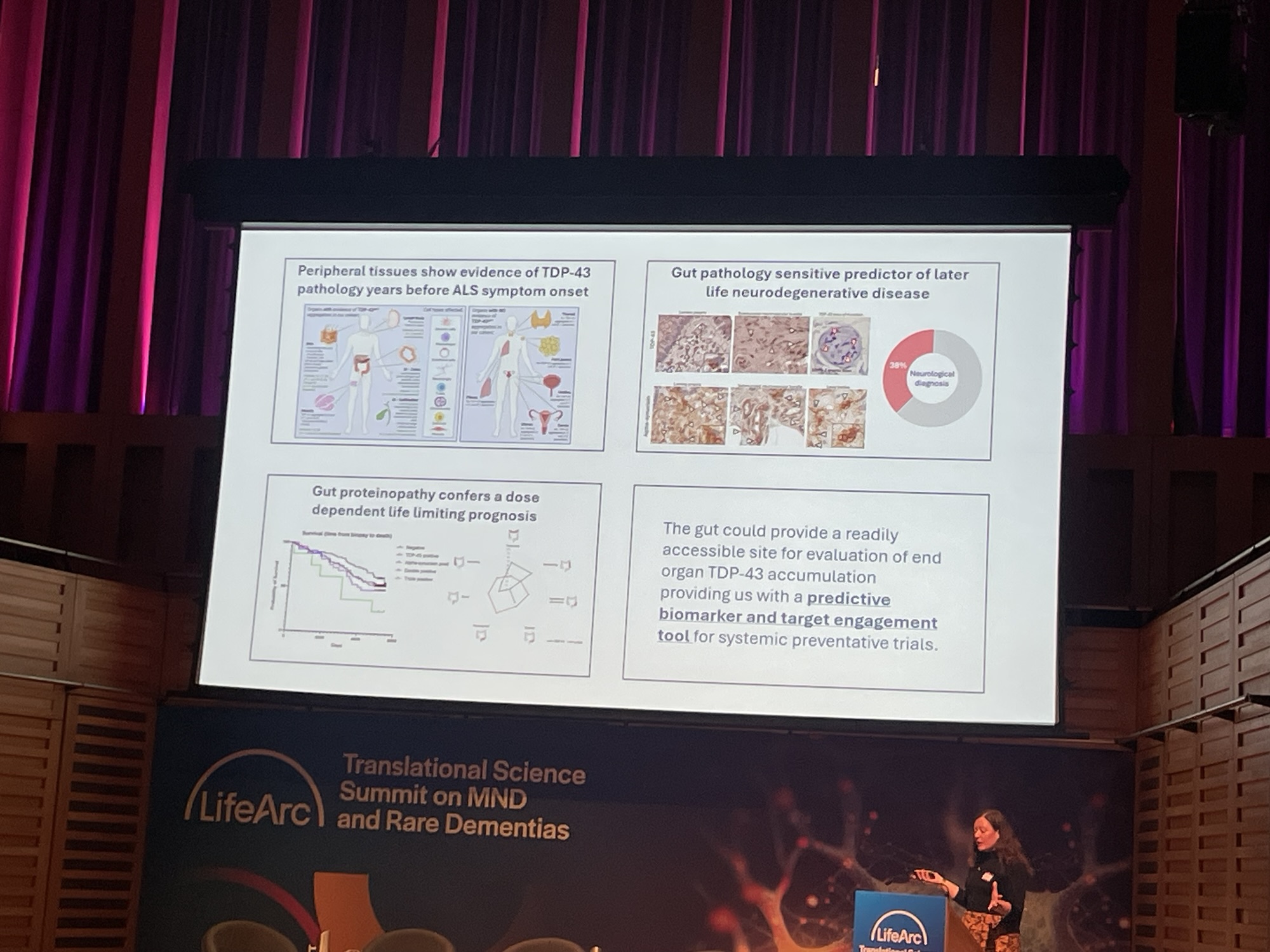
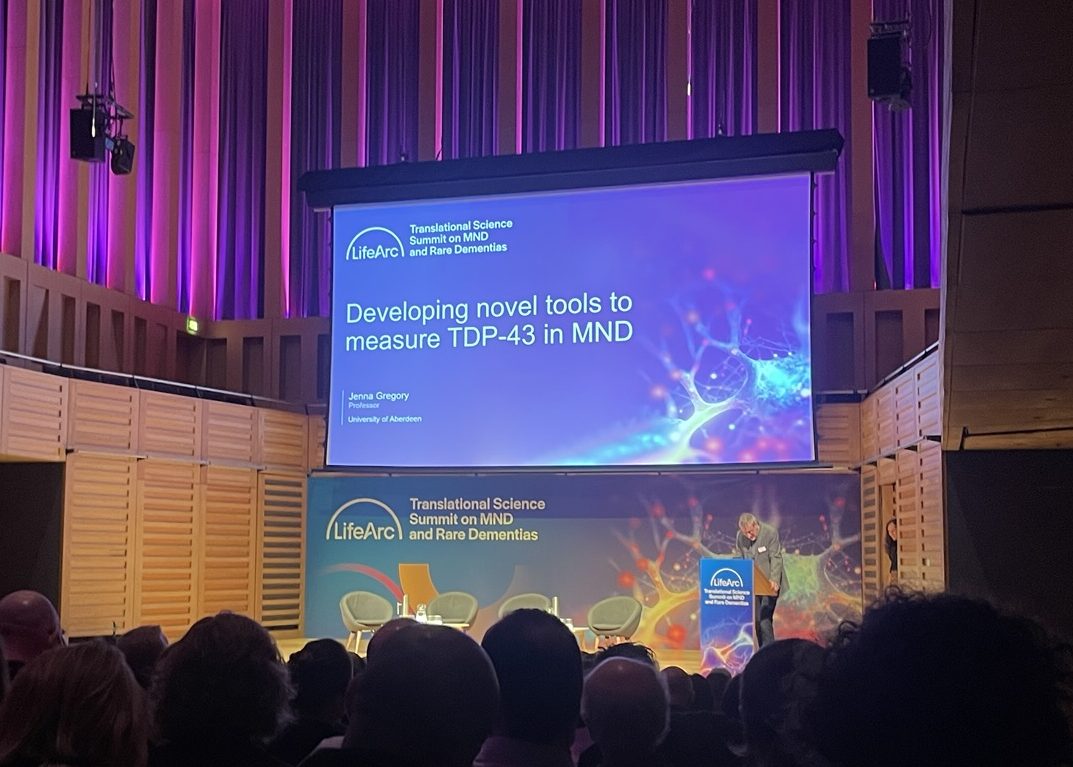
Jenna Gregory of Aberdeen University described intriguing work she and her team are performing on earlier diagnosis, or perhaps more precisely early indications in human health that might help aid and identify risk for neurodegenerative disease. Specifically, the early evidence of more readily available biopsy targets, and in particular the gut. Biopsies, a critical tool in the diagnosis and management of many diseases, including cancer, have long been a hugely challenging area for neurodegenerative diseases, like MND, only being possible post-mortem. This work could prove very fruitful for our disease.
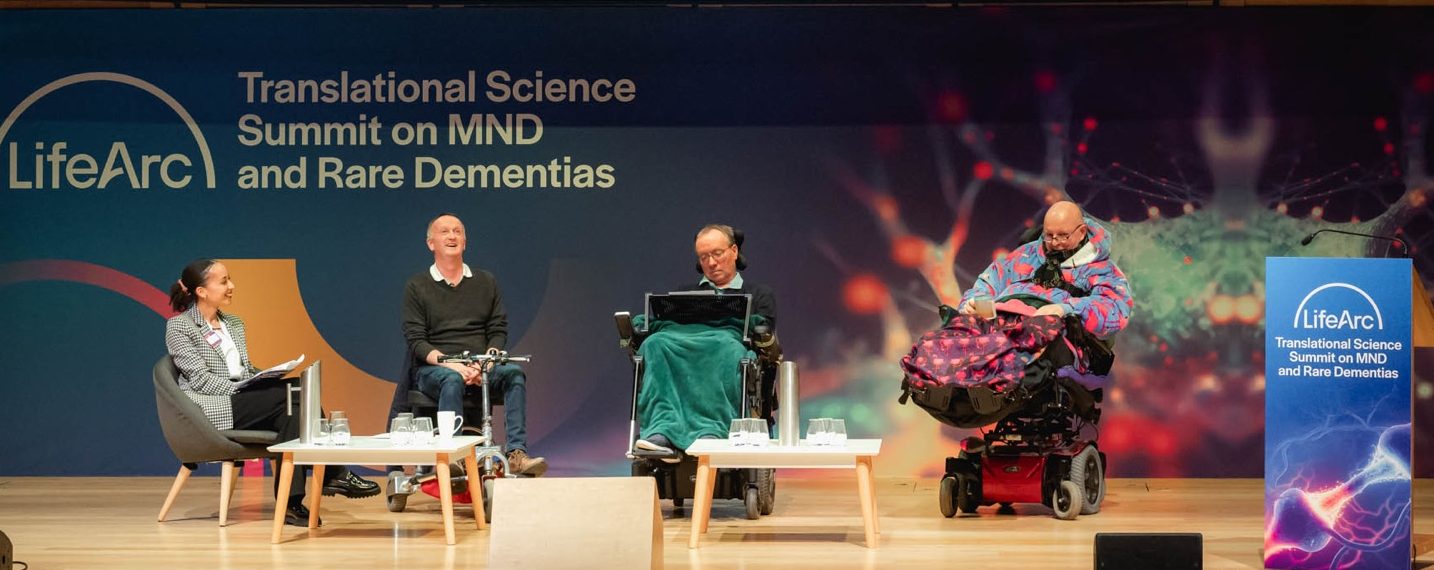
United2endMND were represented by Lee Millard and David Setters along with fellow patient Dr Rick Nelms who participated in a panel discussion with LifeArc’s Natasha Ratcliffe.

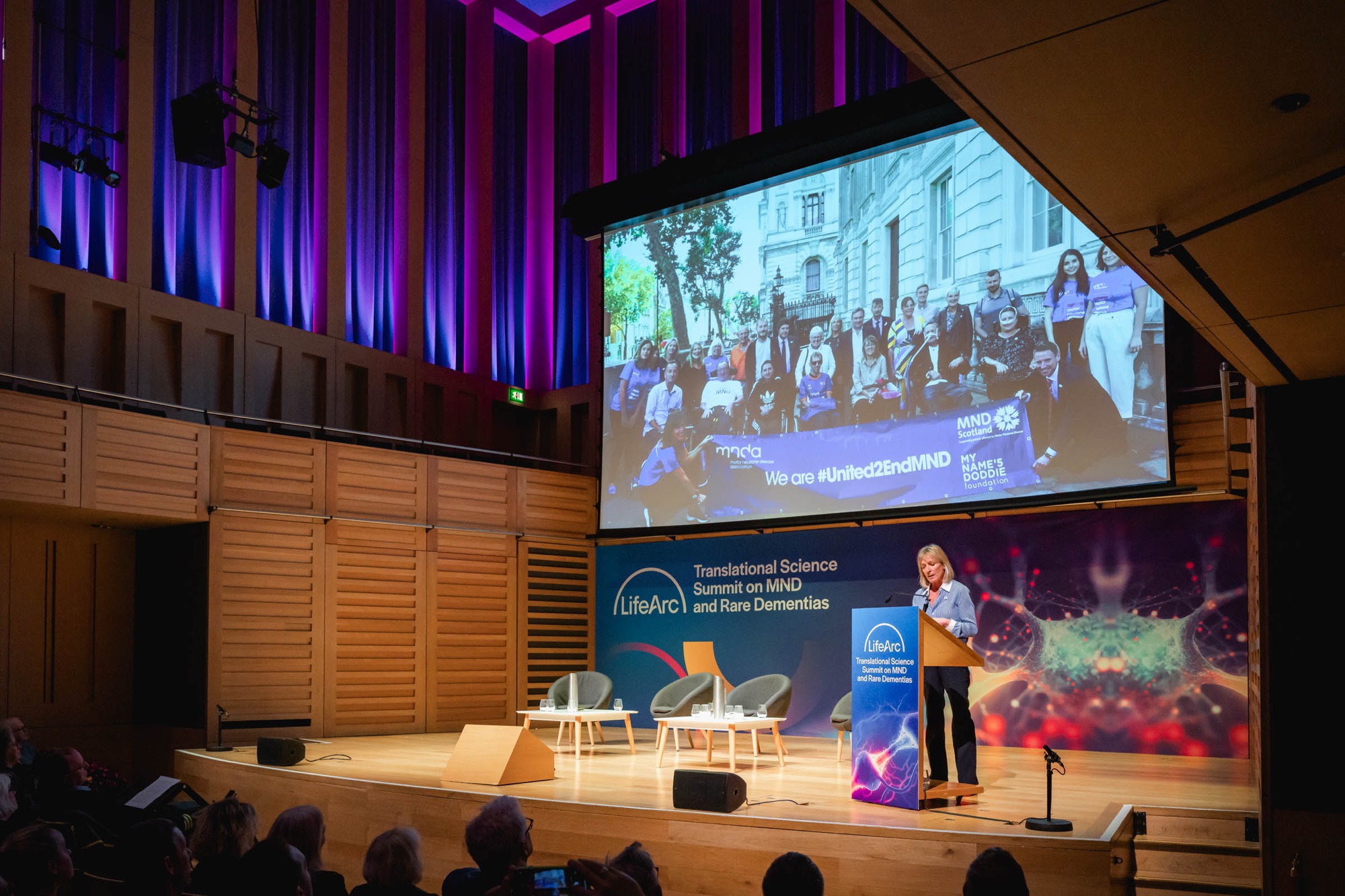

Lee and David discussed the United2EndMND campaign that led to the formation of the UK MND Research Institute in 2023, why it was and is needed, the importance of communications and future needs for research into MND.
We spoke, candidly, about the failure of attempts to treat our disease and other neurodegenerative diseases with nearly 200 failed trials over 25 years or more. We also described both the frustrations and positive aspects of working with the UK government science departments, the NIHR and UKRI. We reiterated how important ‘targeted’ funding was for MND and how it became a driving motto for the £50m United2EndMND campaign. We are, often, as our paper in the Brain journal described, almost Lost in translation. LifeArc are committed to our severe unmet need, as is demonstrated by the very title of the summit which not only highlights MND, but also the rare dementias (eg FTD), which have been added to their investment portfolio because of the common underlying scientific mechanisms.
Dr Rick Nelms talked enthusiastically about the emerging fluid bio-markers, following a presentation in the morning, and how they could finally help select better drug candidates for, and accelerate, trials.
Rick also emphasised the importance to the ordinary people who find themselves living with MND, of clear, straightforward communication of research findings in plain English so that people are able to understand what drug discovery and translational research is being done and what the results really mean.
Change, in the form of faster trials and drug screening was clearly the mantra of Professor Martin Turner who was on an expert panel on repurposing drugs.

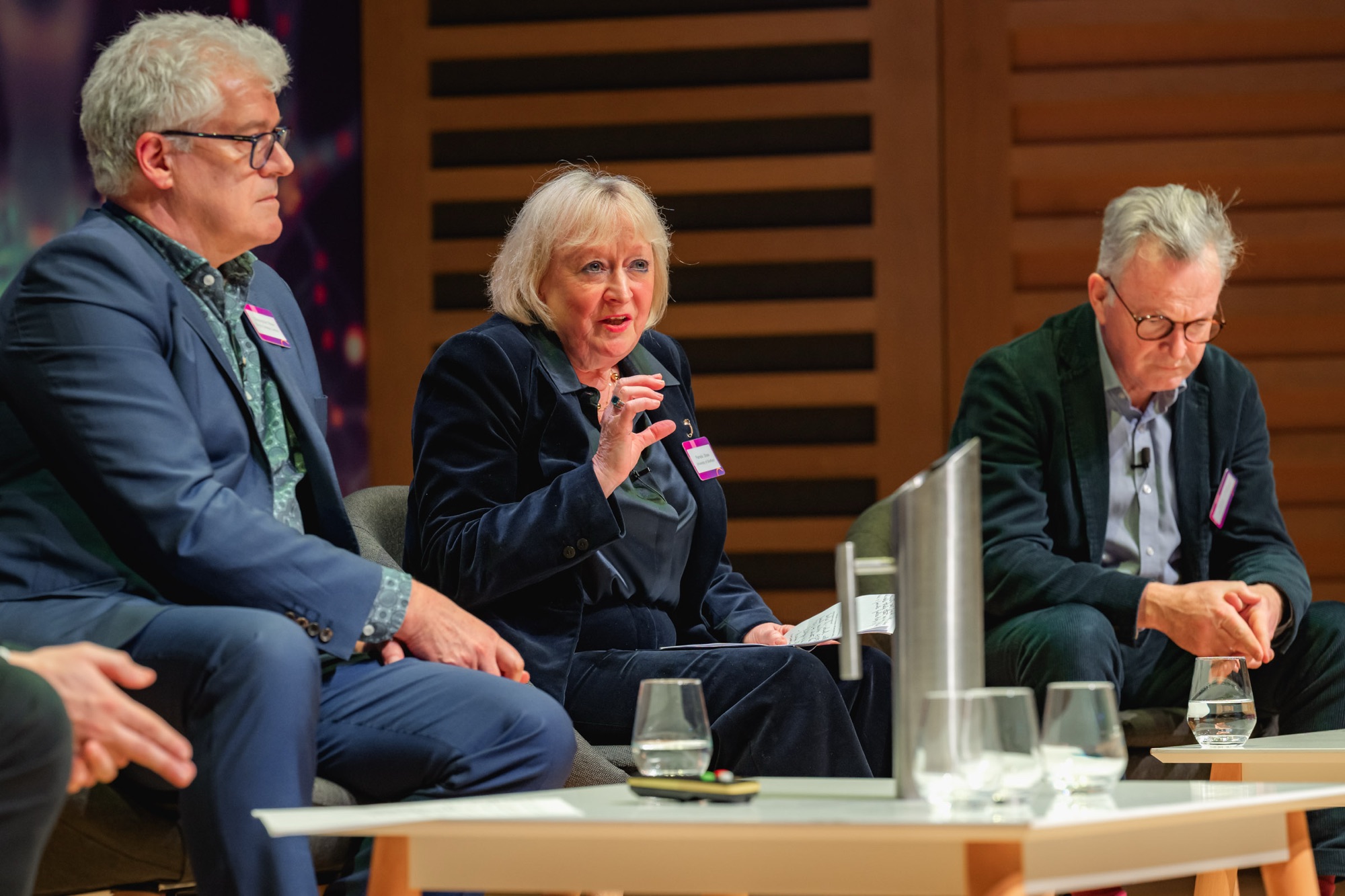
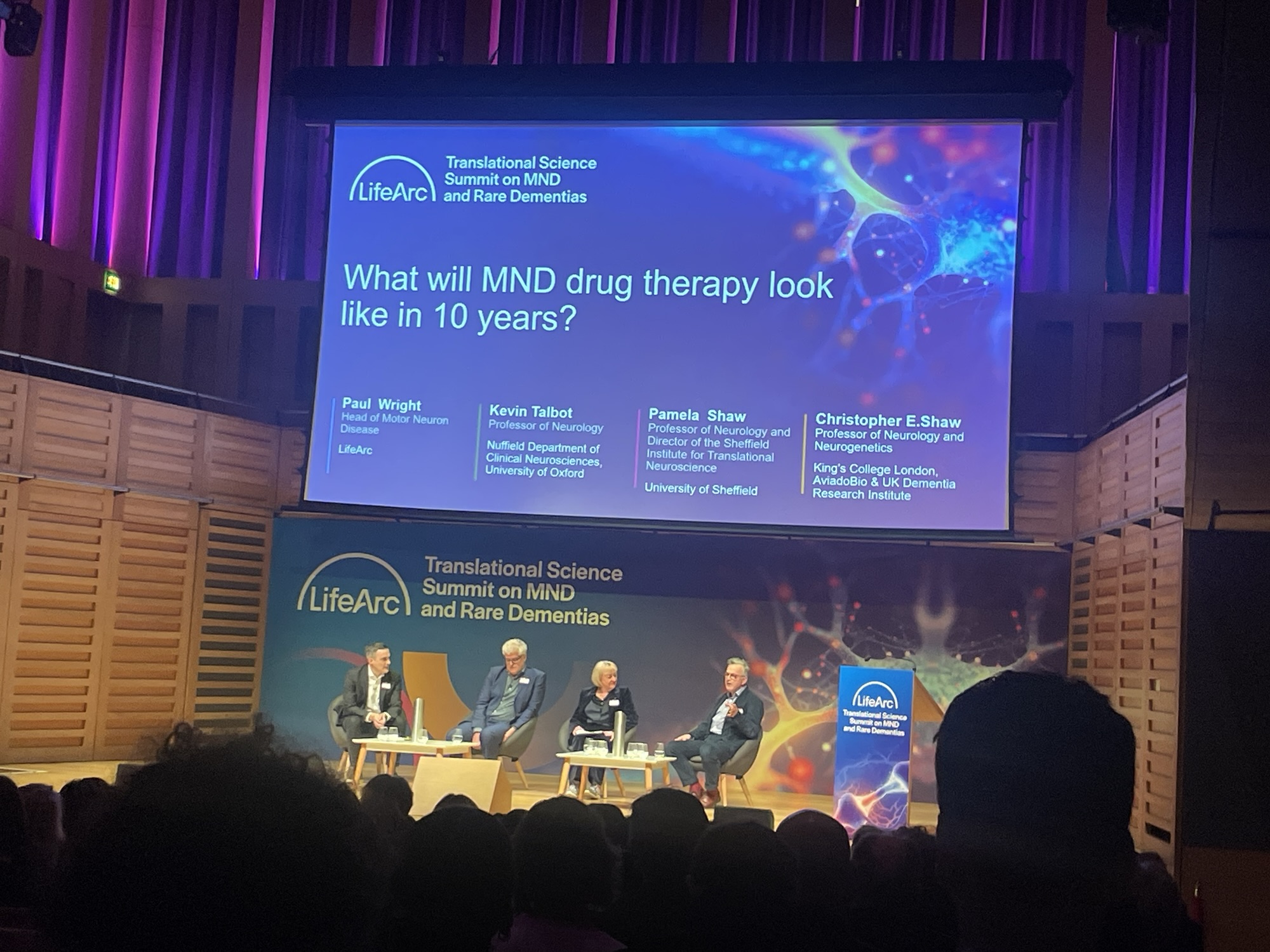
His words echoed those of many in the patient community, but also his fellow MND researchers’ experience of seeing patients with the most desperate prognosis spending potentially their last months, in what he and others have witnessed as repeated, heartbreaking failure.
“This can’t carry on”, he said, citing this is as a founding principle behind the EXPERTS-ALS drug screening platform, a key component of the UK MND Research Institute. Incidentally this project is the single biggest UK government funded MND project in research history.
Increasing numbers of drug candidates are emerging, both novel and repurposed. To continue with only long, expensive trials would exhaust the availability of patients. With less than 2000 new patients a year in the UK and the need, typically, for 300 patients in traditional trials, continuing the same approach is pretty much doomed to failure. At the very least we would see a huge delay in potential treatments reaching patients.
The collaborative spirit of researchers, charities and patients was very much a key theme for the day. Our thanks go to LifeArc not only for organising the event but also for playing a vital role in MND research by bringing together such an excellent and diverse group of players in our disease space for the greater good.
United2endmnd

 We are United2EndMND - Changing the conversation